



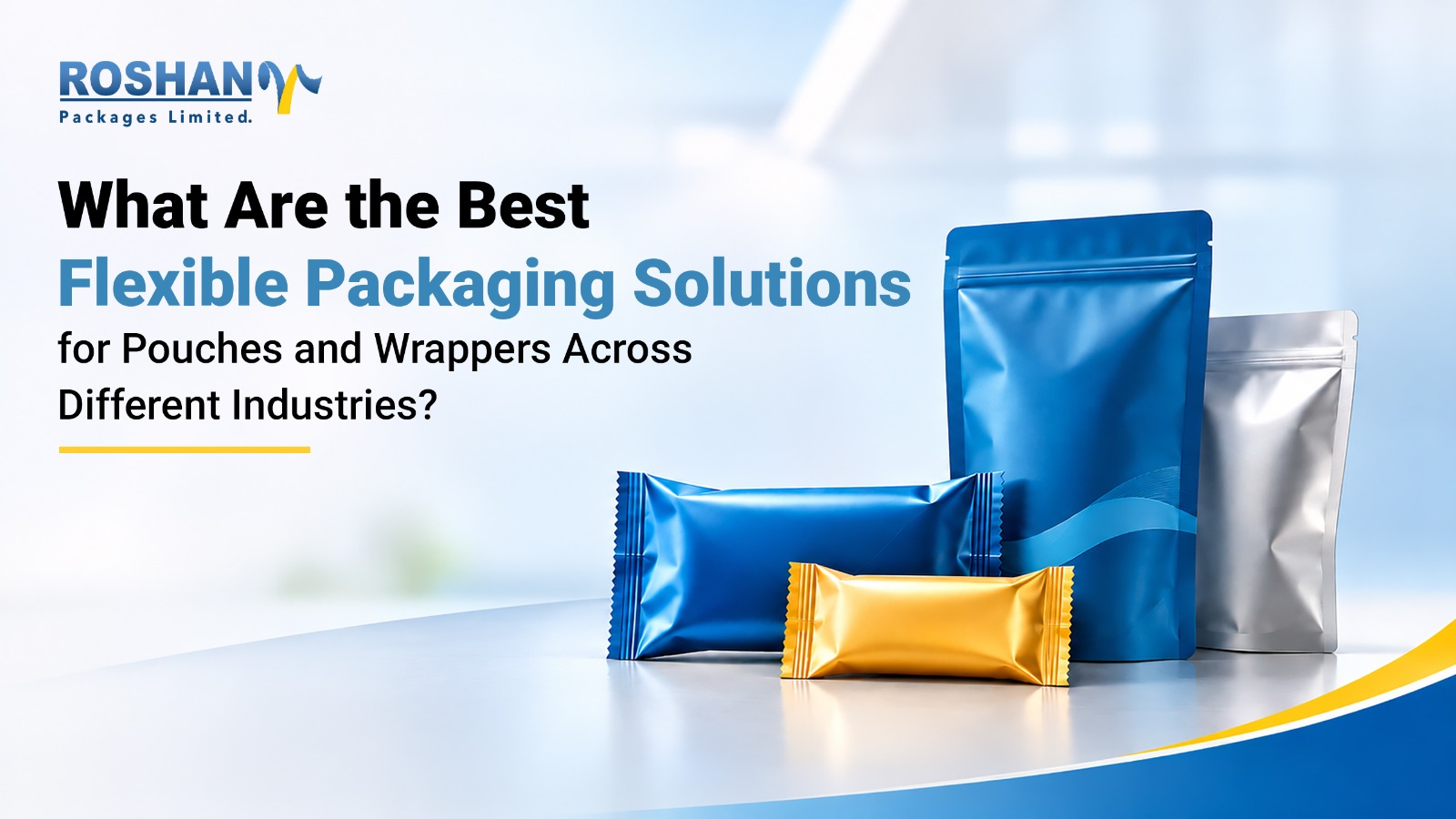
What Are the Best Flexible Packaging for Pouches and Wrappers?
A packet of biscuits may reach the retailer with its seal intact, yet lose its crispness. A visually appealing detergent pouch might leak during handling, resulting in product loss. These situations reveal an important reality: packaging performance matters just as much as presentation.
Flexible packaging combines adaptable materials, including plastic films, foils, and laminated structures, to create pouches, sachets, and wrappers suited to different applications. Beyond containing products, these formats help preserve quality, enhance shelf appeal, and support efficient distribution.
However, similar-looking packages can have very different performance requirements. A chocolate wrapper must address freshness and product protection, while a liquid detergent pouch demands chemical compatibility, durability, and dependable sealing.
Selecting the right solution requires understanding the product’s characteristics, filling process, expected shelf life, and distribution conditions. Discover how the right flexible packaging solutions can protect your products, reduce costly losses, and strengthen your brand’s competitive edge.
Different Types of Flexible Pouches and Wrappers
Pouches for Containment and Convenience
Pouches form a container around the product. They may arrive ready-made for filling or be form from film on the customer’s packaging equipment.
- Stand-up pouches have a base that allows the filled pack to stand upright. Common applications include snacks, powders and dry foods.
- Flat pouches suit products that can lie flat or be grouped inside secondary packaging.
- Three-side-seal pouches are sealed on three edges, leaving an opening for filling before final closure.
- Sachets provide compact packs for measured quantities, such as shampoo, spices or drink powders.
- Zipper pouches allow repeated opening and closing. The zipper supports convenience after opening, while the original seal protects the unopened pack.
Confirm available formats, dimensions, and closures with the supplier.
Wrappers and Laminated Rolls
Wrappers are typically formed around an individual product or a group of products. Examples include biscuit packs, chocolate wrappers and confectionery packs.
In flow-wrap packaging, a continuous web surrounds the product and is sealed into individual packs. The film must suit the machine, product shape and required sealing conditions.
Laminated roll packaging describes the supplied material rather than one finished format. Printed rollstock can be converted into wrappers, sachets or pouches on suitable equipment.
Bubble wrap, Bubble Wrappers, and Bubble sheet refer to protective cushioning for transport, not sealed consumer-product wrappers.
Which Materials Are Best for Flexible Packaging?
The performance of flexible packaging depends on the materials used and how they work together. Each material offers distinct properties, while the effectiveness of the finished package is determined by the selected grades, thicknesses, and overall structure.
Sealing, Strength and Barrier Layers
Polyethylene (PE) is widely used in flexible packaging for its flexibility, moisture resistance, and heat-sealing properties. Different PE grades can be selected to meet specific filling, handling, and sealing requirements.
Polypropylene (PP) is commonly used in two forms: BOPP (Biaxially Oriented Polypropylene) and CPP (Cast Polypropylene). BOPP is widely preferred for printed food packaging, while CPP can serve as a heat-sealable layer, depending on the selected grade.
Polyester (PET) offers mechanical strength, dimensional stability, and excellent suitability as a printed outer layer, making it a common choice for laminated flexible packaging.
Nylon, also known as polyamide, contributes toughness and puncture resistance, particularly in applications requiring additional mechanical protection. Its suitability depends on the packaged product and the other materials within the structure.
EVOH is valued for its oxygen and aroma barrier properties, helping protect sensitive products from external exposure. It is typically incorporated into multilayer structures, with the complete construction designed around the product’s storage and performance requirements.
Foil, Metallized Films and Combined Structures
Aluminium foil offers strong protection against light, oxygen, and moisture when used within a properly designed and undamaged packaging structure.
Metallized films feature a thin metal coating applied to a film surface to enhance barrier performance. However, their protective properties depend on the film, coating quality, and handling conditions, making them different from aluminium foil.
To achieve the required packaging performance, manufacturers often combine materials through lamination or co-extrusion. Lamination bonds separate layers together, while co-extrusion produces multiple polymer layers in a single process.
These technologies allow each layer to perform a specific function, whether enhancing print quality, supporting heat sealing, improving mechanical strength, or providing barrier protection.
Effective packaging depends on selecting suitable materials, not simply adding layers.
Best Flexible Packaging Solutions for Different Products
Snacks, Biscuits and Bakery Products
Maintaining crispness is a key packaging consideration for chips and other snacks. Exposure to moisture can affect their texture, while products containing fats may also require oxygen protection to preserve quality. Suitable barrier rollstock, converted into properly sealed packs, can help address these requirements.
Biscuits face similar moisture-related challenges, along with the risk of breakage during handling and transportation. Their wrappers must provide adequate protection and consistent sealing, while trays or secondary cartons may offer additional physical support.
Bakery products, however, have varying packaging needs. A dry cracker and a soft cake differ in moisture content and shelf-life requirements, making it important to select packaging structures suited to each product.
Chocolates and Confectionery
Chocolate packaging requires careful consideration of moisture, light, and aroma protection, depending on the product’s formulation and distribution conditions. Wrappers should also offer reliable sealing and convenient opening for consumers.
For individually wrapped sweets, selecting a material compatible with the wrapping process is equally important. However, packaging alone cannot prevent damage caused by unsuitable temperatures, making proper storage and transportation conditions essential for temperature-sensitive products.
Tea, Coffee, Spices and Powders
Preserving aroma and product quality is a major consideration when packaging tea and coffee. Exposure to oxygen and moisture can affect their characteristics, making suitably selected laminated pouches or rollstock valuable options for meeting the intended shelf-life requirements.
Spices and powdered products also need protection against moisture absorption and aroma loss. Sachets are often suitable for smaller quantities, while larger pouches may provide convenience for repeated use. Particular attention should be given to preventing powder contamination around sealing areas to maintain package integrity.
Dairy Products
Dairy packaging requirements depend largely on the product’s form and processing conditions. Milk powders may need effective moisture and oxygen protection, whereas liquid dairy products require dependable containment and secure seals.
Packaging systems also differ for chilled, hot-filled, and aseptically packed products. Selecting the appropriate material structure therefore requires careful consideration of processing methods, filling conditions, and expected storage environments.
Detergents, Personal Care, Oil and Ghee
Detergents and personal-care products require packaging materials that are compatible with their formulations while providing adequate strength and reliable sealing. Sachets may be suitable for measured quantities, whereas larger packs must withstand the weight and handling demands of their contents.
Similarly, oil and ghee packaging must ensure secure containment while providing appropriate protection against product deterioration. Material selection should consider filling temperature, sealing performance, storage requirements, and transportation conditions.
The best format is one validated for the actual product and packing process, not merely the most common option.
How Can You Choose the Best Flexible Packaging Solution for Your Product?
Define the Product and Its Shelf-Life Requirements
Choosing the right flexible packaging begins with understanding the product itself. Consider whether the contents are dry or liquid, oily or water-based, fragile or sharp-edged, and assess their sensitivity to oxygen, moisture, light, and aroma loss.
The next step is to establish the required shelf life and expected storage conditions. Products intended for extended storage may require different barrier specifications than those distributed quickly through a controlled local supply network.
Where necessary, evaluate technical parameters such as Oxygen Transmission Rate (OTR) and Water Vapour Transmission Rate (WVTR), which measure the passage of oxygen and moisture through packaging materials under specified test conditions. These values should be compared under relevant conditions to ensure a meaningful assessment of barrier performance.
Match the Packaging Material to Production Requirements
A suitable packaging material must perform consistently on the equipment used to fill and seal the product. Sharing essential specifications with the supplier, including machine type, filling temperature, production speed, pack dimensions, and sealing method, helps determine material compatibility.
For rollstock applications, additional details such as reel width, winding direction, and print repeat are equally important for smooth machine operation.
A film that demonstrates excellent sealing performance during a controlled laboratory test may behave differently on a high-speed production line. Therefore, testing the proposed material on the intended machinery with the actual product is essential before finalizing the packaging specification.
Evaluate Presentation, Cost and Practical Performance
Beyond technical requirements, packaging should communicate product information clearly and provide a convenient user experience. Printing must ensure that branding, instructions, and variable details remain legible, while opening features should be appropriate for the product and its intended use.
Cost evaluation should extend beyond the purchase price of the packaging film. Material consumption, production waste, rejected packs, and overall packing efficiency all influence the actual cost of packaging. A lower-priced material may offer limited savings if it creates operational difficulties or increases wastage.
Agree on assessment criteria, including shelf-life studies, seal-integrity checks, and distribution trials.
These checks balance protection, manufacturing efficiency, convenience, and cost.
Common Challenges in Flexible Packaging and Their Solutions
Even suitable flexible packaging can suffer freshness loss, leaks, damage, or printing defects. Investigating each cause helps identify corrective action.
Loss of Product Freshness
Spices, snacks, and powders can deteriorate from moisture or oxygen entering through inadequate barriers, damaged films, or weak seals.
Review the structure, seals, and storage conditions. Appropriate moisture and oxygen barriers help maintain quality when the complete pack performs as required.
Leakage and Weak Seals
Leakage in shampoo sachets, sauces, or other liquid packs can lead to product loss and complaints.
Causes include unsuitable sealing temperature, pressure, time, or contamination. Check machine settings and material compatibility to improve integrity.
Physical Damage and Lamination Problems
Sharp edges, excessive pressure, or rough handling can puncture films. Poor interlayer bonding may cause laminated structures to separate.
Inspect failures and assess film strength, construction, and handling. Corrective actions may include material changes, lamination controls, or improved secondary packaging.
Printing Defects and Production Issues
Poor print registration, inconsistent colours, damaged graphics, and irregular film feeding can affect packaging appearance and interrupt production.
Review printing conditions, tension, winding, and machine settings; coordinate quality checks with the supplier.
Flexible Packaging Solutions at Roshan Packages Limited
Packaging selection involves protection, printing, seals, and equipment compatibility. Roshan Packages Limited offers integrated flexible packaging and co-extruded film manufacturing capabilities.
Integrated Flexible Packaging Manufacturing
RPL’s flexible packaging facility covers film extrusion, rotogravure printing, lamination, slitting, rewinding, and converting. Its range includes laminated rolls, pouches, sachets, wrappers, shrink wrap films, and wrap-around labels.
RPL produces up to four-layer laminated packaging. Its German Windmöller & Hölscher (W&H) plant makes five-layer co-extruded barrier and non-barrier films.
These operations support printed rolls and converted packaging products.
Barrier Films for Product Protection
RPL’s capabilities include multi-layer polyethylene films and high-oxygen-barrier films incorporating Nylon and EVOH.
Material selection depends on the product, shelf life, filling method, and storage environment.
Manufacturers should validate performance rather than choose structures based on layer count alone.
Supporting Different Industries and Packaging Requirements
RPL serves a range of industries, including food and snacks, biscuits, confectionery, bakery, dairy, beverages, oil and ghee, detergents, home and personal care, and herbal and pharmaceutical products.
Its equipment includes W&H and Worldly rotogravure printers, COMEXI laminators, and TITAN and other slitting and rewinding machines.
Customers should share product type, shelf life, pack dimensions, filling process, machine specifications, artwork, and order volumes.
Samples and production trials can help establish suitability before routine manufacture.
Choosing the Right Flexible Packaging for Your Products
Suitable packaging balances protection, materials, seals, production compatibility, and presentation. Pouches and wrappers must perform during filling, storage, transport, and use.
Understanding product requirements helps avoid leaks, freshness loss, and damage.
Roshan Packages Limited offers flexible packaging and co-extruded film capabilities across industries. Businesses can share specifications with RPL to explore suitable materials and formats.